Selfish Susan [1991]

Published: Mandy: #1261 (16 March 1991) – #1269 (11 May 1991) (final issue)

Episodes: 9

Artist: Dudley Wynne

Writer: Unknown

Reprints: None known

Plot

Susan Smith is a selfish girl. Not surprisingly, she is not popular at school. Then Susan contracts an illness that leaves her temporarily deaf. All of a sudden, Susan enjoys a swell in popularity because the girls are sympathetic and make a big fuss over her and give her treats. The school staff also give Susan special privileges and allowances because of her deafness, and her parents spoil her too. Susan loves every minute of it, so when her hearing returns she keeps it a secret so she can continue with the gains she’s made and take advantage of everyone.

Being able to hear in secret also enables Susan to pull tricks to get extras she wants, and she does not care if it hurts someone. For example, she wants a tape recorder (easier to switch off her music quickly with when someone approaches), but not just any tape recorder. She wants the most expensive one in the catalogue. When her parents say they can’t afford it, Susan pulls at their heartstrings and sympathy until they give in and buy it for her. She has no thought whatsoever about how hard financially it must have been on them. In another episode Susan wants to go on a school trip, but all the places are filled. So she gets the girl on the list ahead of her into trouble with a teacher so the girl gets crossed off the list. The poor girl’s in tears, but all Susan cares about is being on the trip after all.

Susan’s thinking resembles that of a spoiled brat. When it looks like she is not going to get her own way she thinks, “Oh, it’s not fair!” She thinks this so much it could be her tagline.

Then new girl Sonia arrives. Sonia has had the same illness, which diverts some of the big fuss over Susan away from her. Susan feels threatened by Sonia, especially where Sonia’s suggestions threaten to cramp her privileges at school, such as being excused note-taking in class and copying the notes off the girls later. However, Sonia suggests something she did when she did when she was deaf: tape-record the lessons and have her parents recite them to her later so she can lip-read from them. Susan, who never got the hang of lip-reading like Sonia and prefers to crib notes off the girls, has the tape-recorder cause such a nuisance in class that Sonia gets into trouble because of it. And so it becomes one of the dirty tricks Susan has been pulling on Sonia to make her unpopular and neutralise the threat she poses.

However, Susan’s lack of ability with lip-reading becomes the beginning of the end for her. During another lesson Sonia realises Susan can’t lip-read at all. Therefore she can’t be reading her classmates’ lips, so how come she understands them? It is then that Sonia begins to suspect the truth. But when she tackles Susan, Susan deals with her by feigning the waterworks. As planned, this turns the other girls against Sonia.

Sonia has her suspicions about Susan, though. While they are working in the school stockroom, Sonia pulls a trick to test her suspicions. Susan manages to wriggle her way out of that trick. But then there is a fire in the school and Sonia realises Susan can hear what’s going on all right. However, proving that Susan can hear is not that easy. Once they pupils evacuate from the school and get sent home because of the fire, Susan really pulls at the girls’ sympathy to forestall any attempt Sonia makes to convince them of her discovery. It works, and Susan is confident that Sonia will now give up.

But Susan is wrong. When the girls go to the park, Sonia makes one more attempt to catch Susan out, with a phoney “wet paint” warning. This time, she succeeds. Susan’s initial reaction is to arrogantly say what fools she’s made of them, how it’s been great fun, and she’s come out the winner. This just fuels the girls’ indignation at how Susan took advantage of them and they stalk off, saying they won’t have anything to do with her again. This has Susan realising she is not such a winner because there are going to be no more of the friendships, special privileges etc that she had enjoyed so much; “Oh, it’s not fair!” And she soon finds she is definitely not the winner because nobody ever trusts her again.

Thoughts

This was one of Mandy’s very last stories. It has the distinction of being the last-ever story Dudley Wynne drew for Mandy before she was cancelled. It is a somewhat cruel irony that this story was running cheek-by-jowl with a reprint of another Dudley Wynne Mandy story, “Angel”, because Angel is everything that the scheming Susan is not. It was also the last in Mandy’s long line of stories where a schemer fakes disability.

Stories where girls fake disability were a common staple in girls’ comics. Usually this was to take advantage of people as Susan did, but there have been other motives such as revenge, being blackmailed, or misguided bids to keep the family together. It was more frequent for them to fake blindness, lameness or paralysis rather than deafness, but feigned deafness has appeared elsewhere too, such as Tracy’s “Sheila the Sham”.

Deafness must have been a more difficult disability to fake, though. Imagine if there was a sudden, unbearable noise right in your ear! Faking deafness also means Susan has to miss out on some things such as not being able to laugh at a hilarious television show and the gossip she used to enjoy so much while she could hear. It also leads to difficulties such as Susan having to play her pop music in secret.

Susan isn’t as evil or despicable as some schemers such as Bettina / Linda from “The Dark Secret of Blind Bettina” aka “The Lying Eyes of Linda Lee”. Still, Susan is not a sympathetic character, even when she is genuinely deaf, and she remains unsympathetic throughout. The parents and schoolmates all sympathise with her, but we don’t when we see how opportunistic Susan is being about the big fuss over her. The deafness has done nothing to humble Susan or help cure her of her selfish nature. Instead, it’s made her even more selfish once she realises the advantages she is gaining from it, which far outweigh the disadvantages. She has no remorse or compunction about how she takes advantage of everyone and is not at all grateful for the extra-nice things they do for her. There are no second thoughts or twinges of guilt when she hurts others just to get what she wants. There is no quitting while she’s ahead, but these schemers in girls’ comics never do. She isn’t at all remorseful either when she is finally caught out. It’s just bitterness, horror, and thinking “Oh, it’s not fair!” The final page does not say whether the ensuing ostracism and distrust once Susan is caught out did change her for the better or just reinforced her “Oh, it’s not fair!” thinking. It’s all left to our imaginations. As it is, Susan remaining totally selfish throughout the story is realistic and believable, if regrettable.

It is fitting that the one to catch Susan out is one who had the same illness, which gave her the insight to see through Susan. Sonia is also a contrast to Susan in how she dealt with her illness. While Susan used it to take advantage of people, Sonia took the opportunity to learn and grow from it, such as learning to lip-read.

Some endings to serials can be rushed and crammed at times. So it is good to see the ending built up over a three-episode story arc instead of one episode. The final episodes of “Selfish Susan” do give the impression that Mandy was finishing off the story quickly because of the merger; the penultimate episode is a six-pager and the final one a four-pager, while Mandy’s usual format was three-page episodes. Still, readers always loved extra story spreads.

The Strange Ones [1964]

  • The Strange Ones – Diana: #61 (18 April 1964) – #72 (04 July 1964)
  • Reprinted – Spellbound: #23 (26 February 1977) – #34 (14 May 1977)
  • Art: George Martin

Plot

The Harleminster Ballet School is located in a quiet, rural area of England and everything is peaceful until the sudden arrival of three mysterious girls. The girls surprise the headmistress by already being in school uniform, the school does happen to have three vacancies but it is a most unusual way of joining. Another surprise is, despite the looking identical, they say they are not related and introduce themselves as Jean Smith, Mary Jones and Ann Brown. The headmistress takes them to meet the other girls in their class. On questioning it seems they never danced before and say they wouldn’t know their previous school. The other girls find them weird and creepy. Ursula is to take them to their dorm and it is there the girls first show their unusual powers. Mary starts having fun with a plant, it suddenly grows and attacks Ursula.

Luckily she is stopped by the arrival of the headmistress and other girls. But when the headmistress confronts them, she is stopped in the middle of her speech and then collapses to the floor.  The Strange Ones have used their powers to make her blind. It is clear now that they are dangerous people. They will not say what they want with the school, but they can undo what they have done if they wish, but no one must attempt escape or try to contact anyone. The school is the carry on as normal per the Strange Ones commands and the girls despite no ballet experience make remarkable progress. The other girls in the school are naturally terrified of them. While talking with a teacher, Miss Lennox, they make a plan to contact the police, unfortunately not knowing that telepathy is another of the Strange Ones powers.

Miss Lennox tries to leave and contact the polices but the Strange Ones attack her with a plant. It completely envelops her and when the leaves fall away she looks like one of the Strange Ones. According to the Strange Ones is just in appearance and the unconscious Miss Lennox is taken to bed. The girls in the dance class are upset by these events, but they must continue to follow the Strange Ones demands that the class must go on. One girl wonders why ballet is so important to them. Later the Strange Ones are shown around the grounds. They come to a churchyard where famous ballerina Juliana Tanfield is buried there, using their powers again an apparition of Juliana appears and dances.

The Strange Ones are not pleased to see an arrival (a delivery man)  at the school, but they turn it to their advantage. They give the man super strength and command him to guard the school. Of course when the delivery man doesn’t return this attracts the attention of the police. When they come to the school to investigate, they are chased away by the man and they go to get reinforcements. The Strange Ones are confident in their powers, so they are not worried about this.  When the army arrive the Strange Ones have set rods around the school which the army cannot pass. Meanwhile the girls have come up with a plan, after talking to the Strange Ones partially in Latin, they discover dead languages mean nothing to them, therefore they can use it to shield their thoughts. But the Strange Ones won’t be defeated so easily, they force one of the girls, Maria Blake, to tell them what language they are using. They also allow Maria to escape as the figure they can use her to set a trap.

Four other girls have used an old tunnel to try and contact the army, not knowing that the Strange Ones have now learned Latin and are aware of their movements. When they emerge from the tunnels, they are shocked to find they look like The Strange Ones. The army are about to arrest them, despite their protests, until Maria Blake sticks up for them as there are four of  them they must be telling the truth. Unfortunately, once the army have let down their guard the Strange Ones take over the girls, making them attack. Then leaving the army unconscious they head for the town, to also attack them.

Maria  seeing everything, follows the girls into the town where they wreck havoc. She notices that the girls stick together and following that hunch, she manages to separate one from the others and all four collapse. She then goes back to the school with this knowledge. While dancing, Maria partners with a Strange One, while repeating a multiplication table in her head she maneuvers the girl out the door and locks her out. She tells the others to grab the other Strange Ones and with them now powerless they demand an explanation.Having no other choice they tell the class they come from the planet Talmar which is at war with another planet, Kotil over possession of a third planet, Gald. The opposing planets had agreed to fight a “war in the arts” the winner getting Gald. The Strange Ones had been sent to learn ballet for this war.  They agree to reverse what they have done and leave peacefully once the three are together again. They keep their promise but leave with the ominous words “someday our planet may need earth – then we will return”.

Thoughts

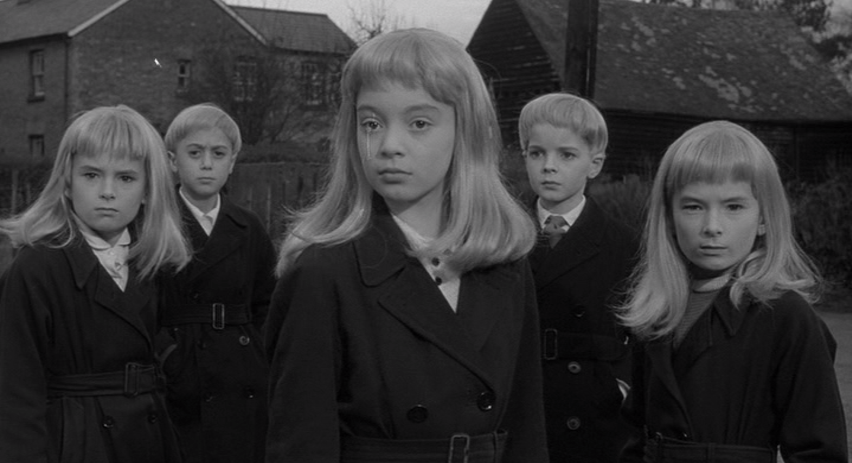
This is possibly influenced by the 1957 novel “The Midwich Cuckoos” by John Wyndham. It’s popular film adaption “Village of the Damned” came out just a few years prior to this story and I can see some similarities. Both take place in an isolated British town, feature strange children, who look alike with their platinum blonde hair and have incredible mental powers and an unknown agenda. The Cuckoos/Strange Ones, always stay in a group, act in a very cold, matter of fact way showing little emotion and unnerve those around them.  It is not the only time The Midwich Cuckoos would influence a comic book, in Grant Morrison’s X-Men run he introduced “The Stepford Cuckoos” a group of five telepathic girls. Perhaps, Morrison was even familiar with “The Strange Ones”.

      (Village of the Damned – Image Source)                    (Stepford Cuckoos in New X-Men #137)

Although the story had 12 episodes it is actually quite short as there was only 1 page per episode. As the events are meant to take place over a short period of time this works to it’s advantage. Things move along quickly, after the first episode the Strange Ones pretense of being “normal” students is dropped. Once they reveal their powers, they are not referred to by their “names” just as the Strange Ones. While we see reactions of the schoolgirls and them trying to come up with plans, there isn’t really a protagonist against the girls until Maria, who isn’t named until over half ways through the story. This works fine as it keeps the focus on the Strange Ones. There is great imagery throughout, capturing the eeriness and formidable powers of the girls.  There is also good use of colour such as the yellow in the panel below, I particularly like the panels where the girls use their powers from a distance. I only have the Spellbound version but I would guess the original in Diana would have been even more impressive with it’s glossy paper. It is understandable why the school girls find them creepy and are frightened.


The ending leaves a lot of questions, I am curious about these warring planets and is the prize, Gald, an occupied planet that they will overthrow?  I would also like to see how this “war of the arts” went, who won, wheter the winning planet would want to expand the number of planets they own and is Earth in danger? Especially with the Strange Ones parting words, which could be seen as a warning or possibly they may need help against a bigger threat! The Strange Ones are true to their word reversing what they have done so maybe Kotil is that bigger threat! I think the mysterious ending  works in keeping in tone with story.


The Mascot

Plot

Alison Johnson was delighted when she was given a toy panda as a gift, but she had begun to feel that there was something odd about it. It was having strange effect on people. Now a strange woman who called herself  “The Spirit of Revenge” was making Alison attack her sister, Stephanie, at home.

Notes

Appeared

  • The Mascot – Suzy: #171 (14 December 1985) – #178 (1 February 1986)

Behind Closed Doors [1986]

  • Behind Closed Doors – Suzy:  #174 (4 January 1986) – #176 (18 January 1986)

Plot

When her parents had to go away on business, Becky Smart was sent to stay with her aunt and uncle at Hawthorn Hall. When she arrives, her aunt and uncle’s foster daughter, Sara, tells Becky she can’t see them as they are ill and confined to bed. Becky suspects Sara is lying and tries to investigate. Sara tries to put Becky off, she tells her although Aunt Margaret can’t have visitors, she is well enough to look out the window. Becky watches the window of her Aunt’s window and does see a figure in it, but by staying and watching Becky notices the figure doesn’t move. She is now convinced Sara has been lying to her and set up a model of her aunt to stop her digging further.

She goes to find Sara and catches her in tears, talking to herself, Sara says she wishes she could tell Becky the truth but she would get in so much trouble. Becky locks her in the room so she can investigate unhampered. Becky gets in to her relatives locked bedroom, her suspicions are confirmed that the figure was just a dummy, but she doesn’t find her aunt and uncle and sees their bed has not been slept in. She goes back to confront Sara and get the truth. Sara confesses that Becky’s relatives had to go away on a science expedition and they had got Mrs Peebles to look after her while they were gone, but Mrs Peebles never arrived because she was in a car accident. Sara was afraid to tell anyone in case she was taken back to the children’s home. She had hopes that she would be adopted and was worried the welfare people would object if they found out she was left alone.

Becky is sympathetic after hearing Sara’s story and wants to help. She arranges it so her cousin Jan will stay with them at Becky’s house until her parents return. Although there wasn’t anything sinister happening at Hawthorn Hall, Becky is glad to be leaving it and can’t help but still be unnerved by the place.

Thoughts

This only has a brief summary as I don’t have all three episodes, but enough to cover the main plot and ending. Suzy had a lot of short serials, that were only 3 issues long. Sometimes this worked well, as it didn’t drag on the plot needlessly, other times it could have benefited to have things expanded on. Suzy also had quite a lot of photo stories, it was a glossy magazine so it worked better than photo stories on cheaper paper like in Debbie, but they still had the problem of looking “staged”. There were some more interesting photo stories, that were more experimental mixing art and photos (such as “The Ninth Nightmare”). This story was more of the standard photo story, still it had a nice mystery and some nice angles and made the house look big and impressive. It ends on a bit of an ominous note, I don’t know whether it’s meant to imply that Sara’s not been honest or just that even with the mystery cleared up, there is something creepy about the house. I don’t think such an ending was needed but I suppose it was more intriguing than wrapping everything up neatly!

The Search for Sister Sarah

Plot

Orphan Jane Ackroyd seemed destined to end up in a workhouse, until she discovered she had a sister, Sarah who had run off to join the circus many years before. Sarah had built up a reputation as a juggler and somehow Sarah’s old doll had the special ability of giving Jane glimpses of Sarah.

Notes

Appeared

  • The Search for Sister Sarah – Suzy: #214 (11 October 1986) – #222 (6 December 1986)

No Dogs Allowed [1986]

Plot

When Colonel Voler banned dogs from Britain in the 1990s, Meg Brown set out with her dog Floss and her three pups to join her father, a wanted resistance worker in Portsmouth. She was pursued by security officer Gritten who hoped to trace her father and destroy the dogs.

Notes

Appeared

  • No Dogs Allowed – Suzy: #213 (4 October 1986) – #222 (6 December 1986)

The Girl with the Power [1980]

Published: Tracy #31 (May 3 1980) – #41 (July 12 1980)

Episodes: 11

Artist: Carmona

Writer: Unknown

Reprints: None known

Special thanks to “Phoenix” for help with some episodes

Plot

Karen Chandler’s father has been jailed for buying stolen goods and attempted murder of an accomplice, the lorry driver, who is now in a coma. The only real evidence against him was the police finding him standing over the driver with an iron bar in his hand. Since then, Dad’s partners in a restaurant, Sam and Nadine Lee, have been turning Karen into a drudge at the restaurant. They lumber her with so much work she doesn’t even get proper sleep.  In addition to the drudgery, there is also bullying at school where the girls constantly tease Karen over her father’s imprisonment. It is no wonder that Karen’s schoolwork is suffering as well.

Karen’s fortunes change on the day the biology teacher sends her class out to collect specimens for a list of plants. Karen unwittingly trespasses into the Energy Research Unit when she fails to see a “Keep Out” sign. There is an explosion at the laboratory, which has Karen’s head spinning. But she doesn’t realise how much the accident has affected her until that evening when Mrs Lee orders her to bring up a heavy sack of potatoes from the cellar. When Karen wishes she didn’t have to lug that heavy sack up the stairs, the sack suddenly moves all the way up there all by itself! Karen realises the accident at the laboratory has somehow given her telekinesis, the power to move objects by thought.

All of a sudden, life has gotten a whole lot easier. It has to be kept secret though, because Karen does not want those slave-driving Lees to exploit her power if they find out about it. Instead, Karen uses her telekinesis for the purpose of secret survival, revenge, and help.

It all begins later that evening, when Mr Lee orders Karen to clean up the restaurant. He is astonished to find the restaurant looks like it has been cleaned up with super-speed or something (with Karen’s telekinesis of course). This enables Karen to get a proper night’s sleep for a change. From then on, the telekinesis helps Karen to get her work done in record time, much to the bafflement of the Lees. For example, when Karen wants to go to the circus, the Lees give her permission and even pay for her ticket – but on condition she gets all her work done first. Of course they deliberately lay even more work her to stop her going, but Karen gets it all done with her telekinesis. So the Lees have to let her go to the circus.

On another occasion Mr Lees lumbers Karen with the job of stripping off the wallpaper for redecorating – and late at night when Karen needs to be in bed – to save him the expense of having the decorator do it. He doesn’t care about Karen staying up half the night doing it, but of course her telekinesis spares her that. Next day, the decorator collapses because he has been working too hard, so Karen does the job for him telekinetically as he needs the money to take his sick wife on holiday. Mr Lee can’t understand why Karen receives a postcard from the decorator expressing gratitude for her help and saying his wife is getting better.

Naturally, Karen starts using her power to secretly strike back at the girls who have been bullying her about her father’s imprisonment. School bully Lydia Welch eggs them on to start baiting Karen, at which she uses her power to turn the window cleaner’s bucket toppling over them and giving them a soaking. Later Karen rescues a younger pupil from Lydia. After a few days, a teacher tells Karen that her schoolwork has improved tremendously. On a school outing to an open zoo, Lydia keeps making snide remarks about Karen’s father. Karen snaps and tips a drink in Lydia’s lap telekinetically.

Karen starts practising in the woods to test the strength of her power. After a week her power gets strong enough to tear trees down. Unfortunately the tree lands on top of Lydia, so Karen has to go get help for her. Yes, Karen definitely has to be careful how she uses that power as it can backfire!

When Lydia comes out of hospital, she is not grateful for the rescue, and continues to plague Karen. When the Welches invite Karen over for tea in order to say thank you, Lydia does not want them to do so again. So she plants her new watch in Karen’s bag to frame her for stealing. Luckily, Karen finds the watch and uses her telekinesis to send the watch back to Lydia’s room upstairs. It’s a challenge as this is the first time Karen has to move something to a destination that is totally out of her sight and without being able to direct it visually, because she can’t move from her seat. Fortunately it pays off, and Lydia is very surprised to find the watch back in her jewellery box!

Karen’s power scores over Lydia again when a temporary pupil, Mandy Clark, makes a friend for Karen against all the bullying. When Lydia tries to put Mandy out of a talent contest, it’s Karen’s power to the rescue. Karen also confronts Lydia with the evidence she carelessly dropped, and Lydia goes off looking very sour-faced.

Karen’s telekinesis enables her to get secret revenge on other people. For example, she strikes back at two rude customers by removing the meat from their plates, and their argument over it nearly comes to blows.

The power also helps Karen on occasions when she gets into real danger. One night, thieves break in to rob the restaurant, and they tie Karen up when she tries to give the alarm. Karen calls 999 telekinetically, and then hits one thief with sauce and the other with flour, which starts a fight between them. As planned, this delays the thieves long enough for the police to arrive. On the aforementioned visit to the zoo, Karen nearly becomes lunch for an escaped lioness and uses her power to stop the lioness mid-air when she tries to pounce.

Of course circumstances arise for Karen to use her power to secretly help other people, such as the exhausted decorator. And at the aforementioned visit to the circus, naughty boys set fire to the Big Top, and it’s a real blaze. Karen uses her power to help a boy who got trapped in the fire. Unfortunately the child sees Karen’s telekinesis and nearly gives her secret away when the circus folk come to reward her. Fortunately they put it down to the boy’s imagination. Karen gets some reward money and her picture in the paper. The Lees ham it up to the reporter about how they treat Karen like their very own daughter (ha, ha!) as they are capitalising on the publicity this will bring for their restaurant.

Sometimes the Lees’ cruelty just explodes in their faces, and Karen does not even need her power for that. On such an occasion, Mr Lee is trying to impress Alex Egan from The Daily Globe, as a mention in Alex’s “Good Restaurant” column will mean more business (and more work for put-upon Karen). Unfortunately for him, he assumes Alex Egan is a man and therefore focuses all attention on the male diner that night. Moreover, the chef and Mrs Lee are laid up with flu, so service slows right down with only Karen in charge and Mr Lee clearly not bothering to get extra help. But it turns out Alex Egan is a woman. She tells them she did not enjoy her meal due to the slow service, though she understands the pressure the waitress was under. So she will not be mentioning them in her column!

Matters come to a head when the police arrive and say the Lees are to accompany them to the police station; the lorry driver has come out of his coma and provided them with vital information. Mr Lee tries a desperate getaway by taking Karen hostage and holding a knife to her throat. Karen uses her power to slam the car door on his arm so he drops the knife, and then she knocks him out with a heavy box. He is arrested.

Karen is suddenly overcome with dizziness and put to bed. The doctor says she is suffering from exhaustion. When she recovers, she finds her father has returned. It turns out Mr Lee committed the crimes Dad was convicted of. An argument erupted between Mr Lee and the lorry driver who had been supplying him with the stolen goods, which resulted in Mr Lee hitting him with the iron bar. Dad came along at the wrong moment and made the cardinal error of picking up the iron bar. This led the police and then the jury to assume he had committed the assault. However, the lorry driver has come out his coma and told the police the truth.

Karen tries to display her telekinetic power in front of her father, but finds she no longer has it. The power has vanished as suddenly and mysteriously as it came. But then, Karen has her father back and is free of the Lees, so she does not need it anymore.

Thoughts

Here we have a protagonist who has not one but three fronts against her at once. The first is the Cinderella theme, where Karen is made the drudge in the restaurant under the Lees who lumber her with all the work and don’t care about her wellbeing at all. They make the excuse of food and board to not pay Karen a penny, and we get plenty of evidence that they are mean, money-grasping sods before the reveal comes at the end that they are criminals as well, and are responsible for Dad’s wrongful conviction. So Karen has been slaving for the very people who caused all her troubles in the first place. Talk about adding insult to injury!

The second is the unjust conviction theme, where the father is wrongly convicted. This has led to her slaving under the Lees, and Karen has to bear the stigma of a jailbird father as well. She cannot believe her father is guilty, which is the only thing she has to help her bear the stigma. Unlike other stories about wrongly accused fathers, clearing him is not the main thrust of the story, although of course it is the only way to resolve it in the final episode.

The third is the bullying theme, where Karen is the target of bullying and ostracism at school because of her father’s disgrace. She has a particularly spiteful enemy in Lydia Welch, who has no redeeming characteristics whatsoever. Throughout the story, Lydia picks on Karen and just loves to rub it in about her unfortunate father.

So it is only fair that Karen is given a particularly powerful weapon to deal with all three fronts. It’s a nice change for a Cinderella character to be given a secret power to help her cope with all the drudgery and misery instead of the more usual talent that she is determined to keep up amid all the abuse against her. Moreover, it is a power that makes life a whole lot easier for Karen. It helps her to get her monstrous workloads done in record time and enable her to get some space for treats, relaxation, and relief. It also helps her to strike back at the bullies at school and other unsavoury types she encounters, and even secretly help other people.

The means by which Karen gets the power in the first place is a bit unbelievable, as is her losing the power with no explanation whatsoever. It just seems to disappear at the most convenient moment – when it is no longer needed. The origin of the power could have been thought out better so it would be more credible to readers. For example, could some third party have given her the power, such as a stranded alien? Or could they have had Karen hit by, say, a bolt of electricity during the laboratory accident?

The power itself is one we all love – the power of telekinesis. We would all love to have telekinesis. It’s the perfect power for the situations Karen faces, including tackling heavy workloads, and does not get her into too many scrapes when things backfire a bit. It is understandable that Karen wants to keep her power a secret because she is afraid of the Lees exploiting it. She is not Carrie, who uses her power openly to strike back at all the abusers when they push her too far. Karen does use her power to strike back, but unlike Carrie she has to do it discreetly. It is also fortunate for Karen that the Lees never seemed to grow suspicious of how she seemed to get her work done so miraculously and keep a discreet eye on her while she worked.

The way in which the father is cleared comes a bit quick in the last episode, but it does not come across as contrived. The setup for the father’s vindication (the unconscious lorry driver recovering and making a statement) had been there from the beginning. It was just waiting for the go-ahead to be developed in the final episode. Until then, there is no pursuing the avenue of clearing him. Karen does no investigating into that line (too much on her plate as it is, even with the power) and there are no clues to make her or the readers suspect the Lees. It is pretty odd that the Lees did not try to kill the lorry driver in hospital; their attack on Karen at the end suggests they could be capable of it. Perhaps they feared it would arouse suspicion?

The House that Jackie Bought [1980]

Plot

Jackie Stanton wins £2,000 in an essay writing competition, which she uses to buy her family’s council house for them. However, this proves to be a very unwise move because it arouses hostility among the locals. Their antagonism reaches such a pitch that the Stantons become targets of bullying, harassment, physical attacks, and even frame-ups on false charges.

Then a gang of hoodlums start a crime wave of thefts from empty houses, and it looks like they are trying to shift the blame onto the Stantons.

Jackie realises graffiti against her on the school wall was written by a classmate, Steve Bristow. After reexamining all the attacks against her, she realises everything points to the Bristow family. This is further confirmed when Jackie recognises Steve’s writing from a note wrapped around a brick thrown through the Stantons’ window, and she threatens him with the police. He says he was only copying the big boys.

Suspecting her house will be targeted that night, Jackie throws a party for the neighbours that same night, and has a policeman as a special guest – and witness. As predicted, the burglars target the neighbours’ empty houses. Jackie helps the policeman and neighbours to catch the criminals in the act, and they are indeed the Bristows. After this, the antagonism towards the Stantons just disappears.

Notes

  • Reprinted and translated to Dutch as “Jennie koopt een huis” (“Jennie Buys a House”) – Debbie #30 (1982)

Appeared

  • The House that Jackie Bought – Tracy: #30 (26 April 1980) – #42 (19 July 1980)


The Flowers of Gipsy Petal [1980]

Plot

Gipsy Petal finds her grandmother’s box of magic flower essences, complete with a magic mirror that directs her on where to use them. However, applying the flower essences doesn’t seem to go smoothly, and hijinks ensue before something works out one way or other.

Notes

  • No episode in issue #36

Appeared

  • The Flowers of Gipsy Petal – Tracy : #32 (10 May 1980) – #39 (28 June 1980)


I’ll Only Walk Alone! (1980)

Plot

Jenny Brent is recovering the use of her legs after a car crash. Then she overhears her father making a phone call to an unknown woman named Daphne that he will join her once Jenny recovers. To keep her father at home, Jenny decides to pretend she is still disabled.

The family find Jenny out when a runaway pram rolls down into the sea and she has to get out of her wheelchair in order to rescue the baby. Dad demands to know how long Jenny has been deceiving her family and why. When Jenny says it was because of Daphne, Dad tells her she jumped to the wrong conclusion; the phone call was about a job offer and Daphne was his employer’s wife.

Notes

  • “The Living Lie of Linda” in Mandy annual 1981 had the same plot.
  • Reprinted and translated to Dutch as “Jenny’s besluit” (“Jenny’s Decision”) – Debbie #32 (1982).

Appeared

  • I’ll Only Walk Alone! – Tracy: #24 (15 March 1980) – #34 (24 May 1980)